
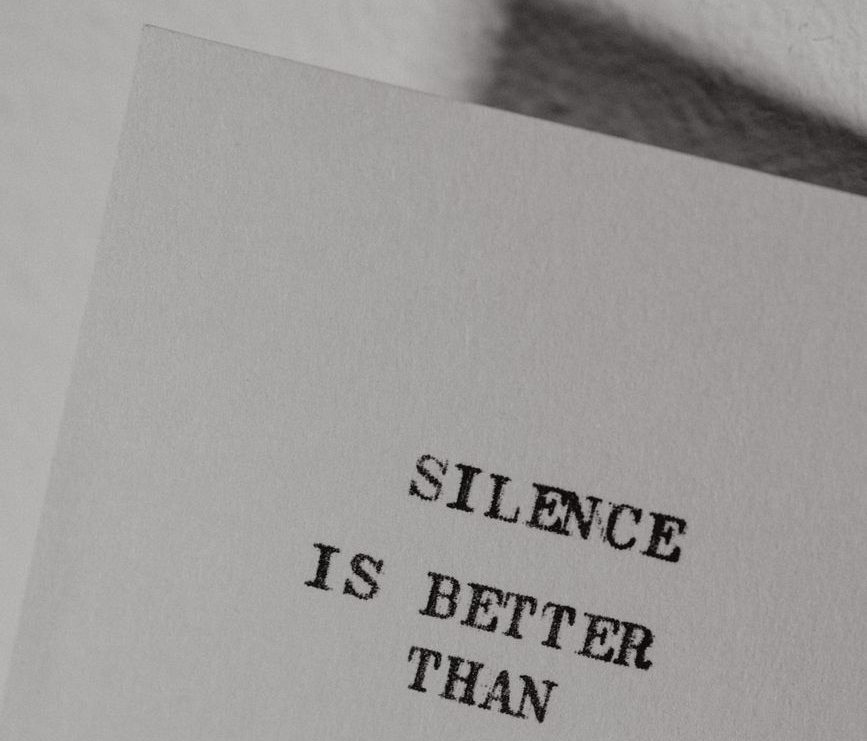
It seems to me that whenever a major event occurs, a controversy erupts, or a cause gains public attention, there is increasingly an assumption that you should immediately take a position on the issue and share your opinion. Silence is viewed suspiciously, and interpreted varyingly as indifference, cowardice, complicity, or even opposition. In an age of social media where immediacy and visibility are rewarded, there is a powerful pressure to speak up, declare allegiance, post solidarity, condemn, comment, and contribute. The faster the response, the better.
I have found myself pondering when we stopped viewing it as entirely acceptable, and sometimes highly appropriate, to not have an opinion on everything ready for public consumption. I have been occupied by this in recent weeks, because I think beginning teachers in particular need to think through the implications of responding to the pressure to comment.
A meaningful contribution?
To be clear, I’m not arguing for bystander passivity. There are moments in history, and in our everyday lives, when remaining silent in the face of obvious injustice is itself a moral choice. History teachers know all too well the consequences of societies in which too few people challenged prejudice, discrimination, persecution, or abuse. There are occasions when silence protects the powerful, and in these situations, there is a moral imperative to speak up in support of the voiceless and oppressed.
My call for private consideration, rather than public declaration, is in relation to those situations where a complex issue emerges and we discover that we simply do not know enough: we lack expertise or do not possess knowledge of the specific context. In short, we are not yet in a position to make a properly informed judgement. In such circumstances, is speaking really the most responsible course of action?
Social media often encourages us to believe that every issue is straightforward and that every person is equipped to offer a meaningful contribution. But many issues are neither simple nor binary. They are complicated, messy, and contested. Genuine understanding takes time and humility. It requires knowledge gained through reading, listening and questioning assumptions, weighing evidence, and sometimes holding contradictory ideas in tension to take an informed position. As teachers, we encourage our students to evaluate evidence before reaching conclusions. We ask them to distinguish between assertion and proof and want them to recognise complexity rather than embrace simplistic narratives. We challenge them to think critically and avoid hasty judgements. It would be strange if we expected less of ourselves.
The pressure to publicly align ourselves with every cause, campaign, or controversy can create the illusion that commenting is always preferable to remaining silent. However, commentary that is poorly informed does not necessarily improve the quality of public discourse. Sometimes it just adds more noise. There is a difference between using one’s voice responsibly and feeling obliged to use it constantly.
Comment is a professional choice
The decision to keep one’s counsel becomes even more important when we occupy positions of professional responsibility. Teachers are entrusted with a particular role in society. While we are citizens with our own beliefs, experiences, and values, we are also educators whose words carry influence. Students, parents, and colleagues may interpret our public statements as carrying professional authority even when they fall outside our areas of expertise. Professional integrity sometimes means recognising where our expertise ends.
Of course, there will always be issues on which we do feel able, and perhaps obliged, to speak. Questions of human dignity, fairness, discrimination, and justice are not matters from which professionals can simply absent themselves. But even then, our contributions are strengthened when they emerge from considered reflection rather than reaction.
A responsible contribution
So, to beginning teachers I say this: not every silence is complicity, and in an age that prizes constant commentary, perhaps there is something profoundly counter-cultural about resisting the demand to have an opinion on everything. There are moments when the most responsible contribution we can make is no contribution at all. And, in the immortal words of Ronan Keating from Boyzone, perhaps, on those occasions, you really do say it best when you say nothing at all.

