
This blog is jointly authored by Vic Crooks and Laura London based on a presentation we gave at the Historical Association Conference in May 2024.
If you are interested in this theme, you may also wish to read Teaching children about sensitive and controversial current affairs: Talking to children in schools about the situation in Ukraine
Chapter 8 of Mentoring History Teachers in the Secondary School also explores these ideas more fully.
We both began our teaching careers shortly after the September 11th attacks on the World Trade Center in 2001. The subsequent national discourse was predictably hostile toward Muslims, and this unfortunately leaked into our schools. Schools with high Muslim populations found themselves managing increasing numbers of racist incidents, as Muslim pupils were indiscriminately accused of being “terrorists.” As a teacher working in a school in a community with higher-than-average support for the BNP, this meant tackling the overtly racist remarks and conversations taking place in the playground, corridors, and classrooms of our school community. This wasn’t easy, and sadly, as old wounds reopen, racism and Islamophobia have again been in full view this summer during the riots.
We know many teachers and pupils will understandably be uneasy about their return to school in September. There has already been discussion about what schools and teachers should do to address the ‘urgent social issues’ that have fuelled a summer of riots. When it comes to whole school policy it will be for policy makers and school leaders to decide.
But how should we approach this in the history classroom? As history teachers we often problematise controversial issues to ‘see both sides of an issue’. However, the violent racism on display is to be wholly condemned, as David Olusoga writes ‘there can be no excuses’.
As always it is helpful to come back to the discipline of history and what it means to teach sensitive histories well. As history teachers we have already had to think about our own approach to teaching sensitive and controversial issues – our discipline requires it. We’ve had to decide if we are going to be avoiders, containers or risk takers (Kitson & McCulley, 2005, p.35), think about how to navigate difficult and, sometimes inflammatory, conversations with pupils, and work out how to support beginning teachers to be ready to do the same. To help, we designed a set of working principles (London & Crooks, 2024, Ch.8) for teaching controversial and sensitive histories (inspired by work from colleagues such as Mohamud & Whitburn, 2016; Mohamud & Whitburn, 2019; Elias & Spafford, 2021; Kerridge & Snelson, 2022) that provide a valuable tool for developing our approach to handling this challenge in the classroom. And so it is to two of these principles that we turn, feeling they could help us on the return to school in September as we face the immediate consequences of a summer of racial violence and ‘thuggery’ that will not wait for adaptations to the curriculum.
Principle 1: Addressing dehumanising language – Teachers will need to be ready to handle sensitive conversations in their classrooms.
Grosvenor (2000, p.157), drawing on the work of Farmer and Knight, cautioned that,
‘Commonplace historical vocabulary… can be value-laden through the process of association’ and ‘people’s cultural backgrounds, whether shaped by class or by race and religion, exert a profound influence on the range of concepts, understandings and assumptions that they bring to their school history. Failure to appreciate this can lead to history that deals in misconceptions – teachers taking it for granted that children see the world in a white middle-class way.’
As far as possible, we need to prepare for the free flow, unanticipated conversations that will inevitably take place in our classrooms this coming year. These conversations will require teachers to balance the rights of pupils to express their opinion on social and political issues, with the rights of pupils to feel safe and respected. They will also require the refutation and correction of factually inaccurate statements and misconceptions. And we can sometimes hope to anticipate this. In the case of the violent riots this summer this might include the ‘legitimate grievances’ argument put forwards in certain parts of the media and society. This means being ready, ahead of time, to unpick and expose this point of view.
Where we are likely to encounter dehumanising terms and perspectives, we need to be on the front foot. It is therefore important that we begin by asking if we understand ourselves what is so problematic about some terms relating to race, empire, and migration, how we decide if a term is dehumanising, and how we help pupils to understand the origins and impact of the language they are using. We may, for example, think that the offensive nature of some terms, the n-word for example, are clear cut. However, these understandings are not universally shared.
Consequently, we need to ask whether the language we use and allow to be used in our classrooms:
- Objectifies, disrespects and disregards the people to whom they refer
- Reduces individuals to a single term and fails to acknowledge the complexity and multiplicity of experience
It can help to think beyond ‘acceptable’ and ‘unacceptable’ words and to engage with the historically layered meaning of such terms. Doing so gives us greater confidence to spot and address nuanced situations like the misconceptions pupils have about the emergence of race as a concept and the origins of migration. Setting parameters and boundaries for classroom discussions creates opportunities for discussion, as opposed to diatribe.
The danger of the populism that has arguably fueled the violence, is that is presents complex problems as simple. If we provide can pupils in the history classroom with ways of discussing sensitive topics that take in nuance and complexity, without breaching safeguarding parameters then, in a small but important way, we resist this danger. It also constitutes really good history teaching.
A resource like the University of Nottingham and Nottingham Museum’s Glossary of Terminology for Understanding Transatlantic Slavery and ‘Race’can help to offer humanising alternatives to dehumanising language and provide ways into explaining to pupils why certain terms are to be avoided.
Principle 5: Understanding that sensitive and controversial histories evolve and often require an understanding of the present context

As well as seeking to restore humanity and agency to those who have been dehumanised and dishonoured in the past, teachers also have a professional responsibility to ensure our young people understand the context of the world in which they live and the ways in which the media and influencers shape their thinking. This provides pupils with safe spaces in which they can learn, grow and thrive. As pupils return to school, teachers will be very mindful of their safeguarding responsibilities and how they can help young people grasp the implications of the summer riots in terms of whole school behaviour, antibullying, racial equality policies, and the law.
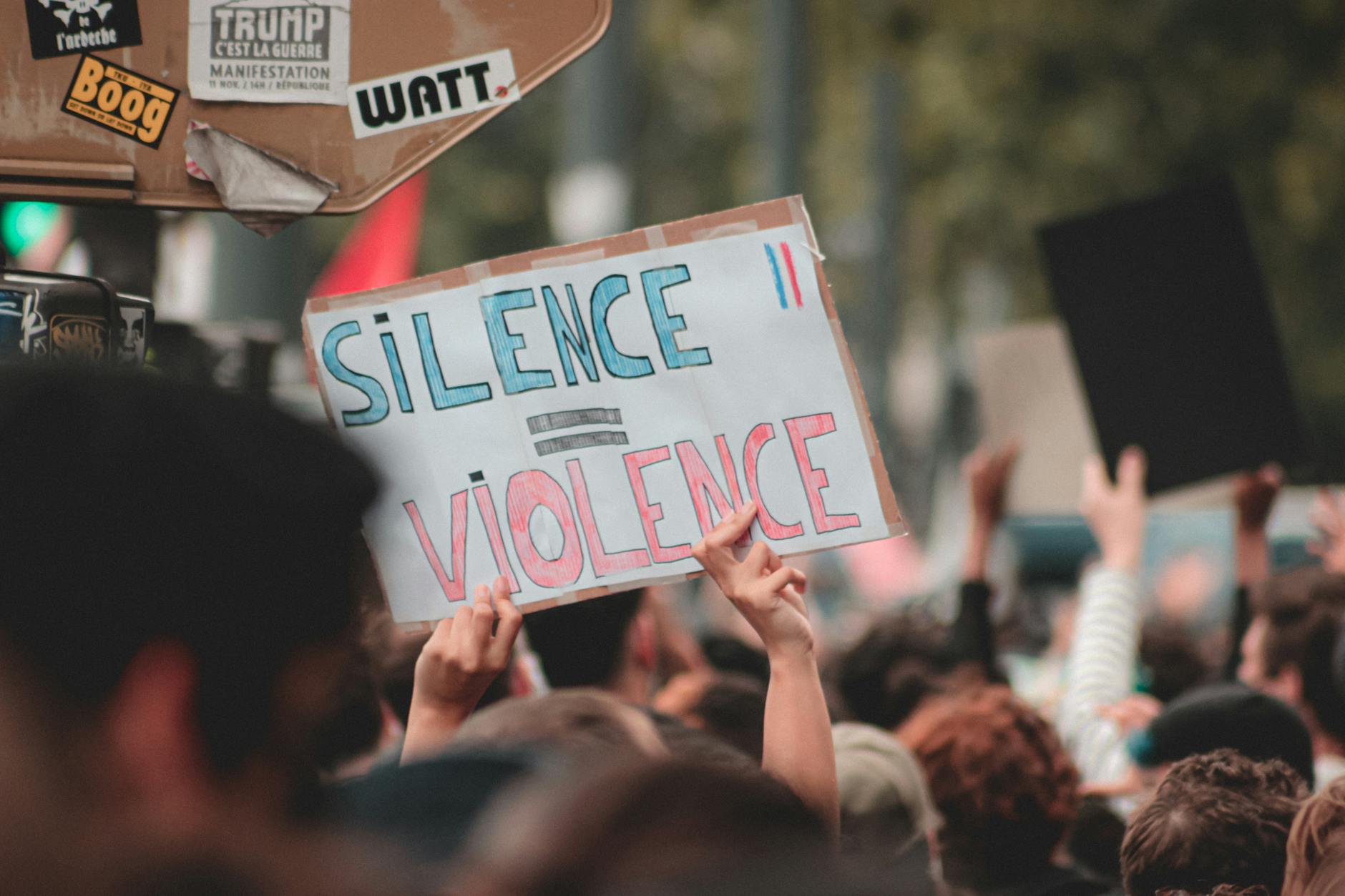
Levstik’s research highlighted that teachers often seek ‘safety in silence’ when confronted with such complexity, but silence and censorship can exacerbate the feelings of powerless disenfranchisement that so often sits behind negative and incendiary behaviours such as those witnessed this summer. Silence can eliminate the chance for young people to appreciate the power and potential damage caused by their language and attitudes to one another in contexts inside and outside of school. It can also remove the opportunity for young people to have misconceptions and ‘fake news’ challenged and corrected. For many pupils, school will be the only place this can happen, the only place where they will be asked difficult questions that expose the misconceptions inherent in the populism that led to violence. As Lindberg said in 2014,
“[censorship] also obliterates the genuine purpose of any history curriculum: to expose students to diverse and often conflicting perspectives, situate complex viewpoints in time and place and identify silences in the historical record—the very silences created by the abuses of power and authority.”
So, teachers will need to face this contemporary experience of race and migration head on. Undoubtedly many senior and pastoral leaders up and down the country are appropriately preparing to address this summer of unrest, rioting and racism via assemblies and tutor times. Their job should be helped by the history curriculum itself. Pupils will be far better placed to begin to grasp the violence on display this summer, if for example they have already learnt about the race riots of the 1980s or indeed the UK Civil Rights movement more broadly.
Another critical aspect of schools’ approach to addressing these issues will be around helping pupils to appreciate the impact of the behaviours we’ve witnessed – for the individuals participating in these acts, for the victims of these acts, and for wider community and society. Consequently, teachers will need to ensure they have developed their own understanding of the laws relating to protected characteristics and the consequences for inciting or participating in hate crimes. This means being familiar with their school’s policies around racism and bullying. And critically, utilizing their expert knowledge to help their pupils to recognise the line between debating controversial topics and engaging in racist or bullying or even illegal behaviours.
Summary of steps teachers can take in preparing to address sensitive and controversial issues in schools:
- Be ready to have challenging conversations and to address misconceptions and dehumanising language
- Prepare for these conversations by developing your own understanding of language related to race, empire and migration.
- Ensure you are familiar with the common misconceptions and factual inaccuracies held about the issue and can refute them (in this case understand the falsehoods and misconceptions that led to the racist disorder pupils will have witnessed and experienced this summer).
- Know the school policies relating to behaviour, bullying, racism and safeguarding so you can employ them where needed. Be prepared to help pupils understand the consequences of discriminatory behaviours for themselves as individuals (including their position in regard to the law) and for their community and wider society.
This is a tall order and sometimes as history teachers (teachers generally) we fall into the trap of wanting to solve all the problems of the world. We can’t. We can teach really good history though.
Further reading
A more detailed look at ‘Supporting beginning teachers to teach controversial and sensitive issues’ can be found in Chapter 8 of Crooks, V., London, L., & Haydn, T. (2023). Mentoring History Teachers in the
Secondary School: A Practical Guide. Routledge. https://doi.org/10.4324/9781003223504
You may also be interested in this blog about talking with children about the situation in Ukraine.
And this podcast from BBC Sounds takes ‘The long view‘ and may provide a way in to discussing this sensitive issue.
References
Dawkins, J. (2021), A Glossary of Terminology for Understanding Transatlantic Slavery and Race, https://nottinghammuseums.org.uk/a-glossary-of-terminology-for-understanding-transatlantic-slavery-and-race/
Elias, H., & Spafford, M. (2021). Teaching Britain’s civil rights history: activism and citizenship in context. Teaching History 185, 10–21.
Grosvenor, I. (2000. ‘History for the nation: multiculturalism and the teaching of history’, in J. Arthur and R. Phillips (eds) Issues in History Teaching. London: RoutledgeFalmer
Historical Association (2019). Working principles for the teaching of Britain and transatlantic slavery, HATF_2019_Britain_and_Transatlantic_Slavery_working_principles (1).pdf
Kello, K. (2016). Sensitive and controversial issues in the classroom: teaching history in a divided society. Teachers and Teaching, Theory and Practice, 22(1), 35–53. https://doi.org/10.1080/13540602.2015.1023027
Kitson, A. & McCulley, A. (2005). ‘You hear about it for real in school: avoiding, containing and risk-taking in the history classroom’, Teaching History 120. London, Historical Association
Kerridge, R., & Snelson, H. (2022). We are invisible! Ensuring Gyspy, Roma and Traveller children do not feel unseen in the history classroom. Teaching History, 188, 10- 18.
Levstik, Linda S. (2000). “Articulating the Silences: Teachers’ and Adolescents’ Conceptions of Historical Significance.” In Knowing, Teaching, and Learning History: National and International Perspectives, edited by Peter N. Stearns, Peter Seixas, and Sam Wineburg, 284-305. New York: New York University Press.
Lindberg, M. (2014). The Danger of Censoring Our History, https://www.learningforjustice.org/magazine/the-danger-of-censoring-our-history [accessed 05/01/2021
Mohamud, A., & Whitburn, R. (2016). Doing Justice to History: Transforming Black History in Secondary Schools. London: Trentham Books.
Mohamud, A., & Whitburn, R. (2019). Anatomy of an enquiry: deconstructing an approach to curriculum planning. Teaching History 177, 28–39.
 Becoming a History Teacher
One thought on “Responding to a summer of riots: Principles for teaching about sensitive issues in the history classroom”